Kathmandu, 8 Shrawan: Minister of Information and Communications Dr. Vikram Thapa has stated that the media sector needs to be made professional, responsible, and robust as weak media cannot effectively question the government and public agencies, nor can they fulfill their responsibilities to society.
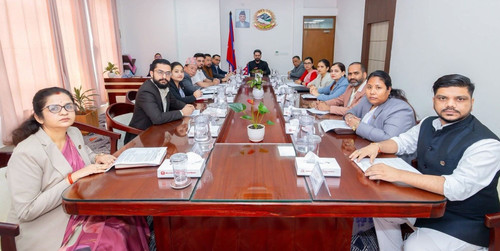
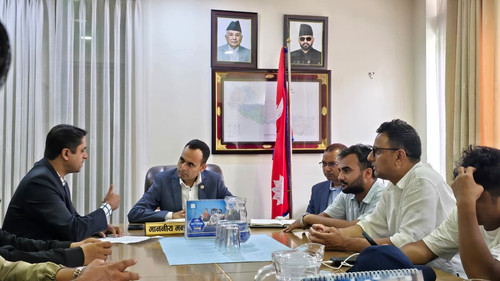
During a discussion with the Online TV Journalists Association, Nepal, at the Ministry of Information and Communications today, Minister Thapa emphasized that only independent, responsible, and reliable journalism can strengthen good governance, transparency, and democratic values. He made it clear that the government does not trust controlled journalism, and the government has adopted a policy of facilitating the development and expansion of the media sector while respecting the full press freedom guaranteed by the constitution.
However, he warned that the government would take strict legal action against media outlets that operate outside the existing laws, regulations, and journalist codes of conduct. "The regulatory body will be made more effective to control irresponsible content, defamation, obscenity, and misleading information, as well as violations of the right to privacy and misinformation," Minister Thapa said.
He emphasized that journalists should work responsibly, keeping truth, facts, and public interest at the center, as journalism is a field with great social responsibility. He argued that improving the field of journalism would strengthen democracy, ultimately benefiting the nation.
Minister Thapa noted that while the rapid expansion of online journalism in recent years has made information flow easier and more effective, this field has also seen the most distortions, irregularities, and unprofessional practices. Therefore, the government is committed to implementing journalist codes of conduct in the media, institutionalizing self-regulation, and creating an environment for responsible journalism.
Minister Thapa believed that having a limited number of professional, reliable, and effective media outlets would be more beneficial to the country than having thousands of weak and irresponsible media outlets. He stated that the development of quality journalism and lasting professionalism is the future of the media sector.
The Minister informed that the government is launching various programs at the national level to enhance digital literacy, and it is also essential to develop the capacity of citizens to distinguish between correct and incorrect information along with the development of technology.
The Ministry of Information and Communications had earlier made public the drafts of the Mass Communications Act and the Media Council Act and sought suggestions from stakeholders. Minister Thapa said that these bills would address the current problems, challenges, and needs for improvement in the media sector.
The Ministry has already directed the Information and Broadcasting Department to implement the legal process for registration of media outlets operating without registration, and necessary action will be taken against those that do not register within the specified time.
The Ministry is also in continuous discussion with the Press Council Nepal to make the media more effective, implement codes of conduct, and strengthen regulatory arrangements.
During the discussion, the Online TV Journalists Association, Nepal, had demanded that online-based multimedia journalism be regulated with clear legal provisions. The association had requested the government to implement a system to register online television channels, register company-operated online TVs with the Press Council, launch a national digital literacy campaign, and establish a welfare fund for media personnel.
The association had also demanded clear legal distinctions between journalists and 'content creators', implementation of a licensing system for journalists, ensuring journalist safety, and arrangements for insurance.
Representatives of the association had emphasized that online-based multimedia journalism, which is rapidly expanding as a new medium in Nepal, needs to be brought under the clear jurisdiction of relevant state agencies and operated based on regulated norms, responsibility, and professionalism.
Kathmandu, 8 Shrawan: Minister of Information and Communications Dr. Vikram Thapa has stated that the media sector needs to be made professional, responsible, and robust as weak media cannot effectively question the government and public agencies, nor can they fulfill their responsibilities to society.
During a discussion with the Online TV Journalists Association, Nepal, at the Ministry of Information and Communications today, Minister Thapa emphasized that only independent, responsible, and reliable journalism can strengthen good governance, transparency, and democratic values. He made it clear that the government does not trust controlled journalism, and the government has adopted a policy of facilitating the development and expansion of the media sector while respecting the full press freedom guaranteed by the constitution.
However, he warned that the government would take strict legal action against media outlets that operate outside the existing laws, regulations, and journalist codes of conduct. "The regulatory body will be made more effective to control irresponsible content, defamation, obscenity, and misleading information, as well as violations of the right to privacy and misinformation," Minister Thapa said.
He emphasized that journalists should work responsibly, keeping truth, facts, and public interest at the center, as journalism is a field with great social responsibility. He argued that improving the field of journalism would strengthen democracy, ultimately benefiting the nation.
Minister Thapa noted that while the rapid expansion of online journalism in recent years has made information flow easier and more effective, this field has also seen the most distortions, irregularities, and unprofessional practices. Therefore, the government is committed to implementing journalist codes of conduct in the media, institutionalizing self-regulation, and creating an environment for responsible journalism.
Minister Thapa believed that having a limited number of professional, reliable, and effective media outlets would be more beneficial to the country than having thousands of weak and irresponsible media outlets. He stated that the development of quality journalism and lasting professionalism is the future of the media sector.
The Minister informed that the government is launching various programs at the national level to enhance digital literacy, and it is also essential to develop the capacity of citizens to distinguish between correct and incorrect information along with the development of technology.
The Ministry of Information and Communications had earlier made public the drafts of the Mass Communications Act and the Media Council Act and sought suggestions from stakeholders. Minister Thapa said that these bills would address the current problems, challenges, and needs for improvement in the media sector.
The Ministry has already directed the Information and Broadcasting Department to implement the legal process for registration of media outlets operating without registration, and necessary action will be taken against those that do not register within the specified time.
The Ministry is also in continuous discussion with the Press Council Nepal to make the media more effective, implement codes of conduct, and strengthen regulatory arrangements.
During the discussion, the Online TV Journalists Association, Nepal, had demanded that online-based multimedia journalism be regulated with clear legal provisions. The association had requested the government to implement a system to register online television channels, register company-operated online TVs with the Press Council, launch a national digital literacy campaign, and establish a welfare fund for media personnel.
The association had also demanded clear legal distinctions between journalists and 'content creators', implementation of a licensing system for journalists, ensuring journalist safety, and arrangements for insurance.
The association's representatives had emphasized that online-based multimedia journalism, which is rapidly expanding as a new medium in Nepal, needs to be brought under the clear jurisdiction of relevant state agencies and operated based on regulated norms, responsibility, and professionalism.